

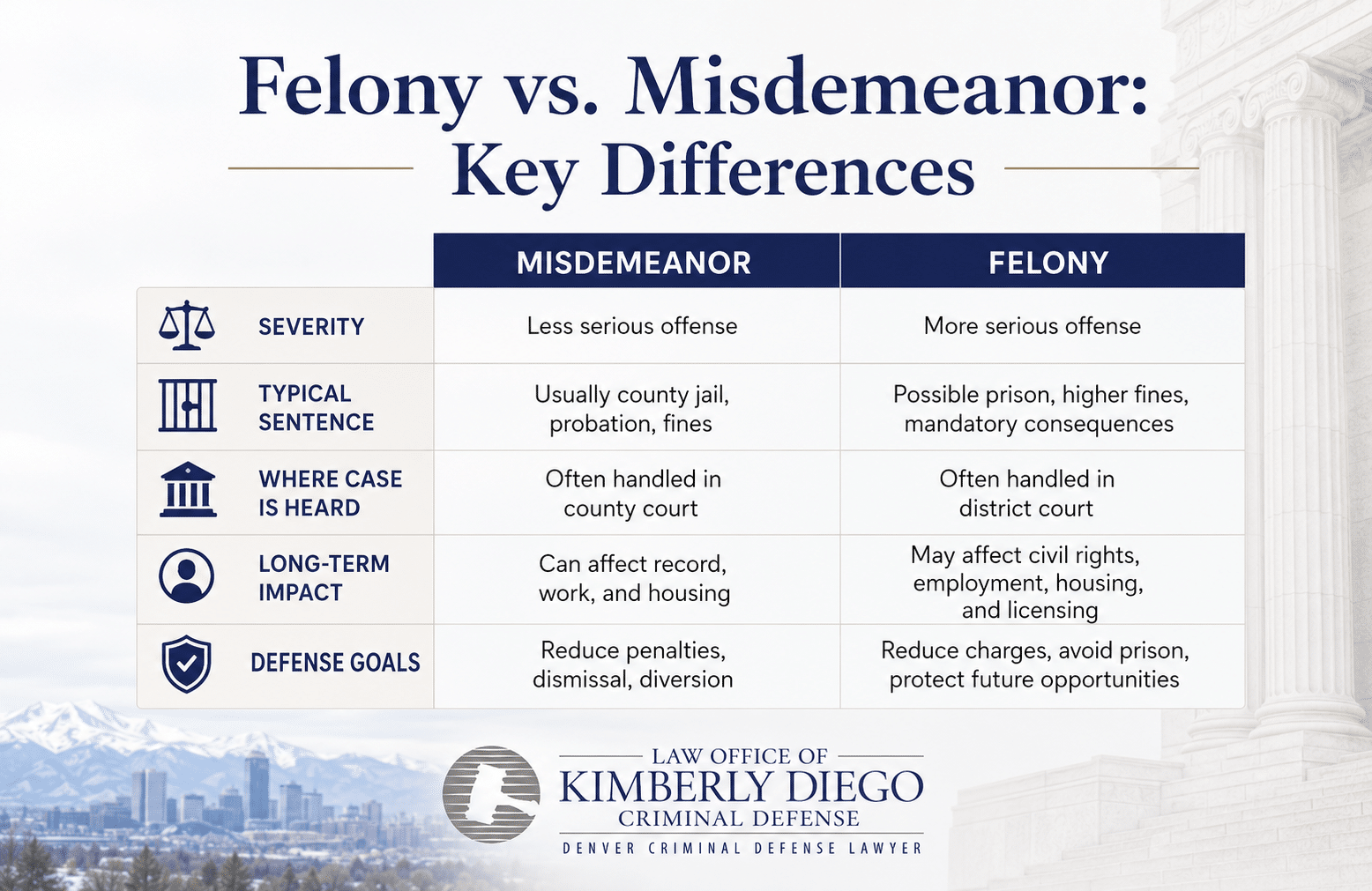
When someone is charged with a crime in Colorado, one of the first questions that matters is whether the offense is a felony or a misdemeanor. The difference affects where the case is handled, the possible jail or prison sentence, the amount of fines, and the long-term consequences of a conviction.
In general, misdemeanors are less serious offenses that are usually punishable by county jail time, probation, fines, or other court-ordered conditions. Felonies are more serious charges that can result in prison time in the Colorado Department of Corrections, higher fines, and lasting consequences for employment, housing, firearms rights, professional licensing, and future background checks.
At the Law Office of Kimberly Diego Criminal Defense, we represent clients in Denver and throughout Colorado facing misdemeanor and felony charges. Understanding how Colorado classifies criminal offenses is an important first step in protecting your rights and building a defense strategy.
Colorado’s Criminal Classification System
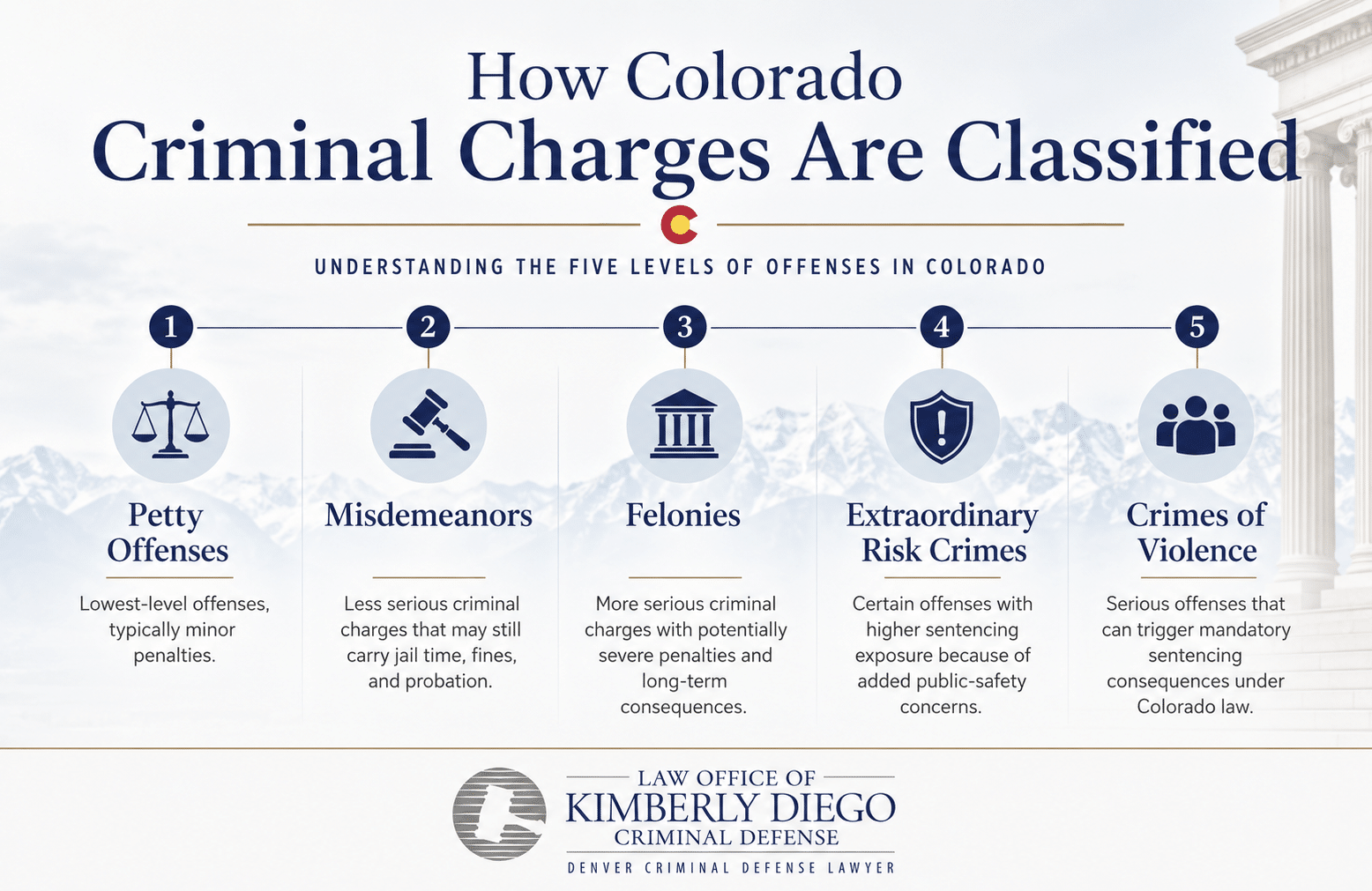
In Colorado, criminal offenses fall into three primary categories: felonies, misdemeanors, and petty offenses. Within each category, offenses are further subdivided by class or level, with more serious offenses carrying higher penalties. The classification of an offense is determined by Colorado statute and is based primarily on the nature of the conduct, the harm caused, and the defendant’s intent.
Colorado’s misdemeanor sentencing classifications are addressed under Colorado Revised Statutes § 18-1.3-501, while felony sentencing classifications are addressed under Colorado Revised Statutes § 18-1.3-401. These statutes provide the general framework for how courts evaluate the severity of a charge, although specific offenses, sentencing enhancers, and case-specific facts can change the potential outcome.
Misdemeanors in Colorado
Misdemeanors in Colorado are generally less serious than felonies, but they can still carry jail time, fines, probation, court costs, treatment requirements, and a permanent criminal record. For offenses committed on or after March 1, 2022, Colorado generally categorizes misdemeanors into two classes:
- Class 1 Misdemeanor: The more serious misdemeanor level, carrying a potential sentence of up to 364 days in county jail, a fine of up to $1,000, or both. Examples can include certain assaults, harassment, theft, criminal mischief, and other offenses, depending on the facts and statutory charge.
- Class 2 Misdemeanor: Carries a potential sentence of up to 120 days in county jail, a fine of up to $750, or both. Examples can include lower-level theft, criminal trespass, disorderly conduct, and other misdemeanor-level offenses.
Some offenses, particularly drug-related charges, are classified as misdemeanor drug offenses with their own sentencing structure under Colorado’s drug laws. Traffic offenses such as driving under the influence may also be charged as misdemeanors in many circumstances, though repeat or aggravated cases can sometimes be elevated to felony charges.
Felonies in Colorado
Felonies in Colorado are significantly more serious offenses and may result in prison time in the Colorado Department of Corrections, higher fines, mandatory parole, and long-term collateral consequences. Colorado divides felonies into six classes, numbered 1 through 6, with Class 1 being the most serious.
- Class 1 Felony: The most serious criminal classification in Colorado, reserved for offenses such as first-degree murder. A conviction can result in life imprisonment without parole.
- Class 2 Felony: Includes offenses such as first-degree kidnapping and certain forms of homicide-related conduct. These charges generally carry a presumptive prison sentence of eight to 24 years and substantial fines.
- Class 3 Felony: Includes offenses such as first-degree assault, second-degree kidnapping, and certain aggravated robbery offenses. These charges generally carry a presumptive prison sentence of four to 12 years and substantial fines.
- Class 4 Felony: Includes offenses such as second-degree assault, vehicular homicide, identity theft, and theft involving higher property values. These charges generally carry a presumptive prison sentence of two to six years and substantial fines.
- Class 5 Felony: Includes offenses such as criminal extortion, second-degree forgery, and certain theft-related offenses. These charges generally carry a presumptive prison sentence of one to three years and substantial fines.
- Class 6 Felony: The lowest felony level, which can include offenses such as criminal impersonation, certain theft-related offenses, and third-degree burglary. These charges generally carry a presumptive prison sentence of 18 months to 1 year and substantial fines.
In addition to imprisonment and fines, felony convictions in Colorado can trigger the loss of important civil rights, including the right to possess firearms. A felony record may also affect professional licensure, immigration status, housing, employment, educational opportunities, and the ability to work in certain fields.
Colorado law also designates some offenses as extraordinary risk crimes, which can carry sentence ranges above the standard presumptive ranges for their class. These may include crimes involving serious bodily injury, weapons, crimes against children, and certain sex offenses.
Additionally, crimes of violence under Colorado Revised Statutes § 18-1.3-406 can carry mandatory sentencing consequences and may limit a judge’s discretion to impose probation or other alternatives in many cases.
Seek Legal Help Today
A felony and a misdemeanor may sound like simple labels, but in Colorado, the classification of a charge can shape the entire direction of a criminal case. It can affect the possible sentence, whether jail or prison is on the table, how the case is negotiated, and what consequences may follow long after the case is over.
In some cases, a defense lawyer may be able to challenge the evidence, negotiate to reduce a felony to a misdemeanor, pursue a deferred judgment or diversion, or seek a resolution that limits the charge’s long-term impact. The right defense approach depends on the facts of the case, the charge classification, the client’s history, and the risks involved.
If you have been charged with a felony or misdemeanor in Colorado, the Law Office of Kimberly Diego Criminal Defense can help you understand what you are facing and what defense options may be available. Contact our Denver criminal defense team today for a confidential consultation.