
A Denver DUI arrest centers on two numbers: the roadside device reading and the station machine reading. Most people assume both are final. At the Law Office of Kimberly Diego, you can work with a Denver DUI defense attorney who understands that both readings can be challenged, and that the strongest defenses are built by reading the paper trail behind the numbers.
The Roadside Breathalyzer and the Station Test Are Not the Same
The portable device officers use during a traffic stop is a screening tool. Its result can establish probable cause for an arrest, but it is not admissible as evidence of your blood alcohol level at trial. The evidential test used in court is administered at the police station using the Intoxilyzer 9000, the only breath alcohol device Colorado approves for use as trial evidence.
That distinction matters immediately. If your case proceeds to a suppression hearing or trial, the prosecution’s BAC evidence comes from the Intoxilyzer result. The roadside number that felt final when the officer read it aloud does not go to the jury as a blood alcohol reading.
Both tests create their own record, which is why DUI defense strategies in Colorado address each one from the outset of a case.
How the Intoxilyzer 9000 Record Can Be Challenged
Every Intoxilyzer 9000 in Colorado is maintained through the state’s official breath alcohol testing program, which repairs, calibrates, and certifies the machines law enforcement uses. That program generates a maintenance and calibration history for each instrument, and defense counsel can request those records for the specific unit used in your test.
The challenge typically centers on two points: whether the calibration log shows any gap or deficiency, and whether the officer documented a continuous 20-minute observation window before administering the test. That observation requirement exists specifically to prevent mouth alcohol contamination from skewing the reading upward.
A test administered by an uncertified officer, on a machine with an irregular calibration record, or without a documented observation window, can be challenged through a motion to suppress. When the BAC evidence is excluded, the government’s case changes substantially.
Why Field Sobriety Test Results Are Not Proof of Guilt
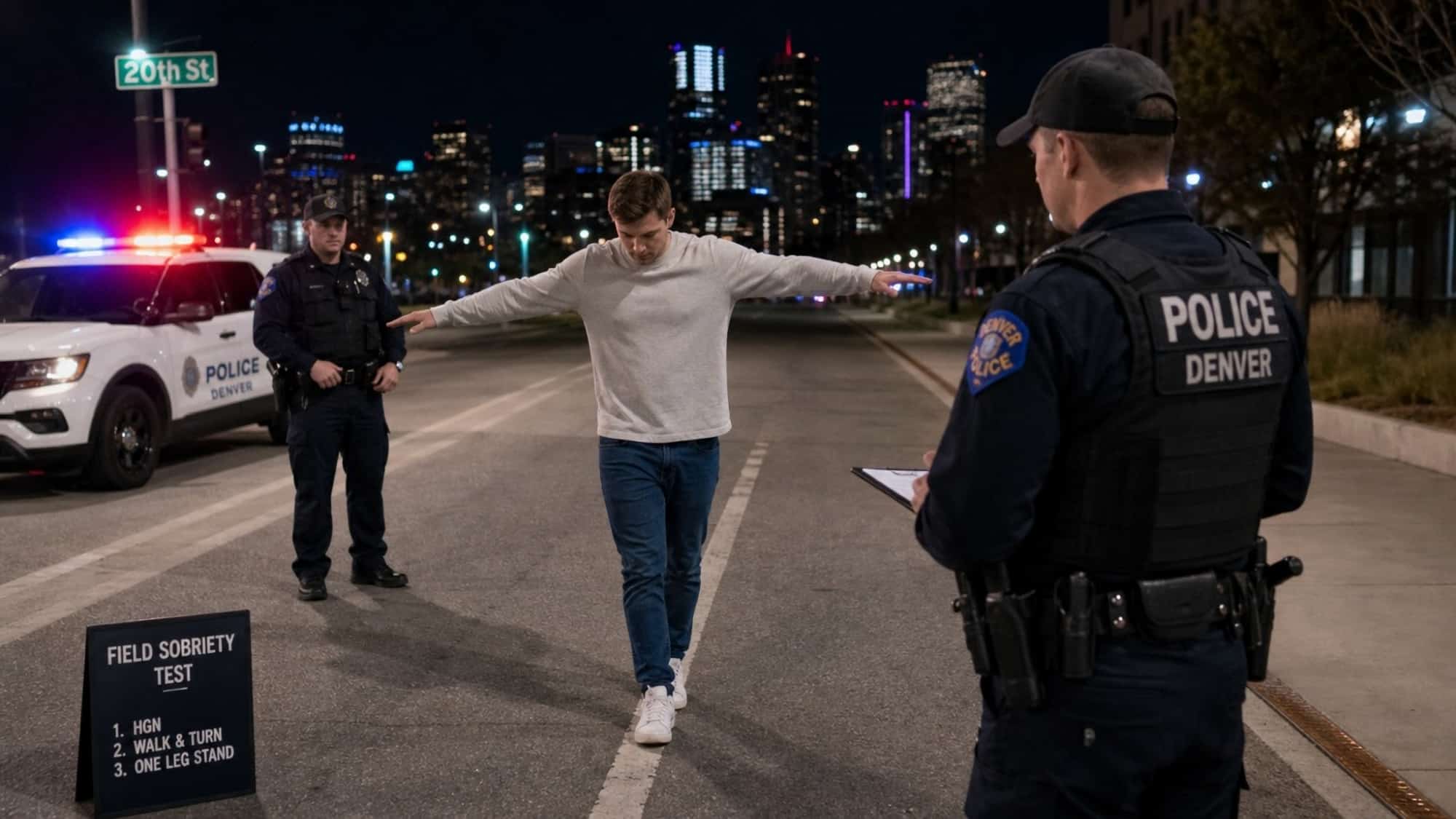
Three standardized tests are used at Colorado DUI stops: the horizontal gaze nystagmus test, the walk-and-turn, and the one-leg stand. Federal research on these tests shows the horizontal gaze nystagmus is accurate about 77% of the time under ideal conditions. The walk-and-turn and one-leg stand come in at 68% and 65%. Those figures come from the same agency that established the testing protocols, and they reflect controlled lab conditions that rarely match a real roadside stop.
Those margins widen further in real conditions, on uneven pavement, in poor lighting, in inappropriate footwear, or when the person tested has a medical condition affecting balance or eye movement. An officer’s assessment of your performance is a subjective opinion, and defense counsel can cross-examine that opinion using NHTSA’s impairment research, which defines how each test must be conducted to produce a valid result.
How We Build the Challenge in Denver Courts
Our review of every DUI case starts with the arrest record from the moment of the traffic stop forward. For breathalyzer challenges, we pull:
- The Intoxilyzer unit’s calibration and maintenance logs
- The arresting officer’s EBAT certification history
- The documented timeline of the 20-minute observation period
For field sobriety challenges, we examine the officer’s training records, the conditions at the stop, and any medical or physical factors that may have affected your performance. Clients who were not clearly informed of the voluntary nature of Colorado sobriety tests may have additional grounds to challenge the encounter’s validity.
A suppressed BAC result does not guarantee dismissal, but it removes the government’s most direct evidence of impairment. Pre-trial suppression motions are often where Denver DUI cases are won or lost, long before any jury weighs in.
Fight Your Denver DUI Charges With an Experienced Defense Attorney
A Denver DUI arrest based on a breathalyzer reading or a roadside sobriety test is never an open-and-shut case. At the Law Office of Kimberly Diego, we build strategic defenses by investigating the specific paper trail behind your arrest—from auditing Intoxilyzer 9000 calibration logs to challenging subjective officer testimonies under NHTSA guidelines.
If you are facing charges, work with a premier, female-owned defense practice established in Denver since 2009. Attorney Kimberly Diego delivers aggressive advocacy and bilingual representation (English/Spanish), backed by 12 consecutive years on the National Trial Lawyers Top 100 list. Call or contact us online today to schedule a consultation and review your defense options.